
When your air conditioner starts to exhibit a little moisture, it’s a sign that something might be amiss. You might notice leaks, strange sounds, or reduced efficiency. Understanding the root cause can save you time and money. By following a few simple steps, you can effectively tackle the issue. Let’s take a closer look at how you can address this problem and restore comfort to your home.
Identify the Source of the Leak
When you notice water pooling around your air conditioner, it’s crucial to identify the source of the leak quickly to prevent further damage.
Start by checking the area around your unit for any visible signs of moisture. Look for cracks in the casing, which could indicate a problem. Additionally, inspect the insulation on the refrigerant lines; if it’s wet, it may indicate a refrigerant leak.
Next, examine the base pan. If it’s overflowing, the issue might be a clogged drain line or a faulty pump.
Don’t forget to check the air filter; a dirty filter can restrict airflow, causing ice to form and melt, leading to leaks.
Taking these steps helps you pinpoint the issue faster, ensuring your air conditioner runs efficiently. Moreover, if you’re experiencing ongoing issues, it’s essential to consult a professional AC service to ensure your system operates correctly.
If you can’t find the source, it might be time to call in professionals like Butler Heating & Air Conditioning for expert assistance.
Check the Drain Line
Since a clogged drain line is a common culprit behind leaking air conditioners, it’s essential to check it as part of your troubleshooting process.
Start by locating the drain line, which is typically near your outdoor unit. Inspect it for any visible blockages, such as dirt, algae, or debris. If you spot something, use a wet/dry vacuum to remove the clog carefully.
Next, pour a mixture of vinegar and water down the drain line to help eliminate any remaining buildup. This simple solution can prevent future clogs and keep your air conditioner running smoothly. Professional installation of energy-efficient systems ensures optimal performance and longevity, helping minimize leaks.
After you’ve cleared the line, monitor it for leaks. If water continues to accumulate, there might be a more significant issue at play.
If that’s the case, don’t hesitate to call a professional to guarantee your system gets the expert attention it needs.
Inspect the Air Filter
One vital step in addressing a leaking air conditioner involves inspecting the air filter. A dirty or clogged air filter can restrict airflow, causing the unit to work harder and potentially leak water.
Start by turning off your air conditioner to guarantee safety. Remove the filter from its housing and check for dust, dirt, or other debris. If it looks dirty, it’s time for a replacement. Depending on your filter type, you may need to change it every 1-3 months.
Cleaning reusable filters helps maintain ideal airflow. After replacing or cleaning the filter, reinsert it properly and turn your system back on. Regularly inspecting the air filter is important for maintaining your unit’s efficiency and preventing future leaks. If you find that your air filter is frequently dirty, consider checking your indoor air quality or consulting a professional for further assistance, as routine maintenance can enhance your AC performance and help prevent issues like leaks.
Examine the Refrigerant Levels
Checking your air conditioner’s refrigerant levels is crucial for preventing leaks and ensuring peak performance. Low refrigerant levels can lead to inefficient cooling and potential damage to your system.
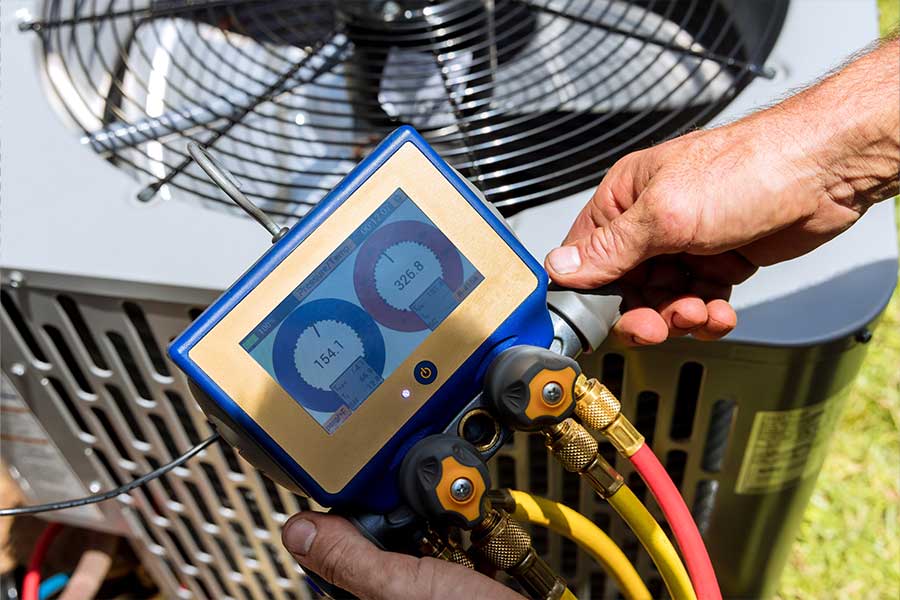
To examine these levels, locate the service panel on your unit. You’ll need a pressure gauge to measure refrigerant pressure accurately. Start by turning off the system to avoid any accidents.
Next, connect the gauge to the service port and check the reading against the manufacturer’s specifications. If the pressure is below the recommended level, it may indicate a refrigerant leak.
Look for oil residue around the fittings or coils, as this can indicate where the leak might be. If you suspect a leak or find low refrigerant levels, it’s important to address the issue promptly to avoid further damage. Keeping your refrigerant levels in check helps maintain your air conditioner’s efficiency and longevity. Additionally, indoor air quality can significantly improve with a properly functioning air conditioning system.
Seek Professional Assistance
When you notice signs of a leak in your air conditioner, seeking professional assistance is vital to prevent further damage. Ignoring the issue can lead to costly repairs down the line, or worse, a complete system failure.
A trained technician can quickly identify the source of the leak and provide effective solutions, guaranteeing your air conditioner runs efficiently.
Working with a reputable company like Butler Heating & Air Conditioning means you’ll benefit from over 75 years of experience. Their team is committed to delivering fast, dependable repairs and installations, along with 24/7 emergency service when you need it most.
Plus, they offer financing options to make necessary upgrades or repairs more affordable. Don’t compromise your comfort or indoor air quality—reach out for professional help.

Conclusion
As you wrap up your air conditioner adventure, remember that a little TLC goes a long way. By tackling the leak yourself, you’ve taken a step towards a cooler, more comfortable home. If things get a bit too tricky, don’t hesitate to call in the pros—they’re the superheroes of HVAC troubles! Keep your system happy, and you’ll enjoy breezy days ahead without the worry of pesky leaks. Stay cool, Dayton!